The History of Underfloor Heating
Underfloor heating is not as new as you'd think...
Underfloor heating has become increasingly popular in this country over the last couple of decades as more and more people have come to realise its benefits. Improvements in technology have overcome any concerns about the durability of barrier pipes and today's underfloor heating is now extremely efficient and reliable. Underfloor heating is often seen as a new technology but actually this method of heating isn't really modern at all.
THE KOREANS INVENTED THE CONCEPT
Underfloor heating can be traced as far back as 2500 years - when the Koreans began using the ancient 'ondol' system. They built a chimney at one end of a building and a cooking stove at the other end. Once the fire was lit, a draught would draw the exhaust gases from the stove towards the chimney. As these hot gases passed through the void below the floor, the stone slabs would heat up, and then, acting as thermal stores, they would slowly release heat into the rooms above.
THE ROMANS ADOPTED A SIMILAR SYSTEM
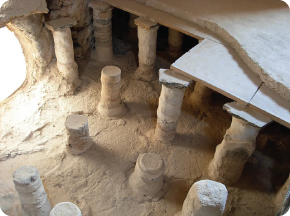
500 years later the Romans were adopting a similar system to heat their public buildings and villas. They used fires to heat air that was channelled through a system of ducts or chambers under the floor. These 'hypocausts', as they were known, were made by raising the floor on 'pilae stacks' and evidence of this design can still be seen in ruined Roman settlements such as Baelo Claudia in southern Spain. The Romans developed and made the concept of underfloor heating widespread and although initially the preserve of the wealthy, it became increasingly commonplace, especially in the colder regions of the empire.
MODERN DAY UNDERFLOOR HEATING BECOMES POPULAR WORLDWIDE
Modern day underfloor heating uses warm water – a method which was developed by one of the 20th century's most prolific architects, Frank Lloyd Wright. On a visit to Japan, the American architect stayed in a home where an 'ondol' type system was installed and struck by what he called 'the indescribable comfort of being warmed from below' he set out to adapt the concept for use in his own designs. Wright realised that using warm water eliminated the risk of lethal smoke inhalation and also made it much easier to control heat output.
Over the years Wright's designs have been improved upon by countless different people and companies. Nowadays, warm water underfloor heating, as we've come to know it, is being installed in buildings of all shapes and sizes, all over the world.
Need an Estimate? E-mail your plans to info@centralunderfloorheating.com